
Summary:
Wherever you are in your journey, from still expecting to planning well-visits, there are resources that can help protect your baby from severe RSV. Our patient brochure can serve as a handy reference, and our doctor discussion guide can help you start the conversation. You can also hear stories about Beyfortus and RSV from real parents on our YouTube page.
Beyfortus basics to keep on hand
Our parent brochure is a handy reference when you’re learning about RSV and how Beyfortus can help protect your baby from serious RSV lung infection. The brochure explains how Beyfortus works and includes important RSV facts and key safety information—all in a short, easy-to-read PDF you can save or share.
Be ready for the RSV talk
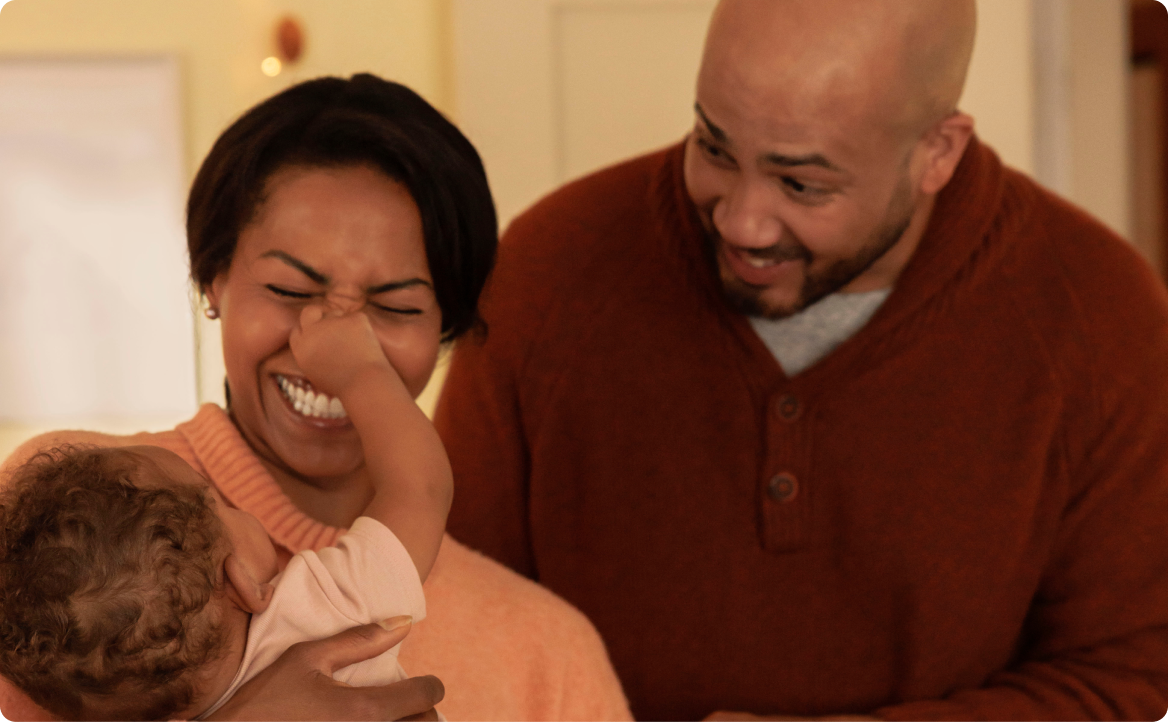
Whether you’re home with your baby or still awaiting their arrival, it helps to feel prepared for your next doctor’s visit. We’ve created doctor discussion guides that match where you are in your journey, so you can feel confident knowing what to ask about RSV protection. Just choose the option that fits you best.
Download your discussion guide
Pick the guide that matches where you are in your journey, then download to print or save it to your phone. Take it with you the next time you go to your pediatrician, family doctor, clinic or hospital.
Parent-to-be guide PDF
New parent guide PDF
Video Hub
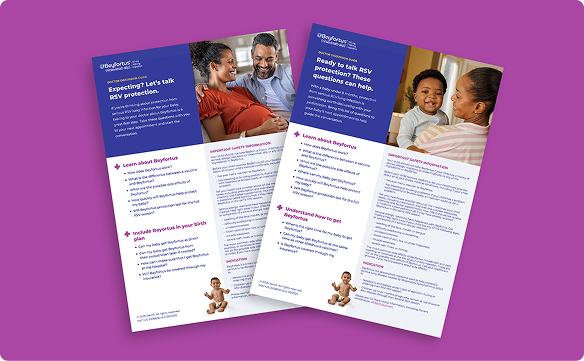
Our video hub brings together stories from real moms, RSV guidance, and helpful information for the early months of parenthood. Whether you’re looking for reassurance or just want to know what to expect this RSV season, the video hub has something for you. See our featured video below.
“I hope that by sharing my story, I can encourage others to research Beyfortus to see if it would be a good fit for their little one.”
Clementine, Mom of Nolan and Liam
Read about Clementine's RSV experience
Clementine's video transcript
CLEMENTINE: I am being compensated for sharing my story with you in this video.
I love everything that has to do with family. Spending time with my family is, I feel like that’s my purpose.
The first time I found out I was going to be a mom, I was excited. I was overjoyed.
A bit overwhelming because we, we don't have a lot of family around. Most of our family is in Ghana, West Africa.
I knew about RSV because of my health training, and when Nolan was exhibiting…
… labored breathing, I knew it was time to take him to the ER. Even as a healthcare provider…
…and seeing lots of kids who are not well, when it’s your own kid, you freak out. That moment, you’re not a nurse. You’re a mom. You’re a parent.
And all you want to do is make sure that your baby is fine.
That moment was very scary. To see your child who seemed so helpless and was having trouble breathing, and you can’t do anything about it.
We learned about Beyfortus at Liam’s pediatrician appointment. This was two days after he was born.
Our baby’s doctor told us that there was a way to help prevent serious RSV lung infection.
When he said Beyfortus would be a good idea for Liam…
…of course we said yes because we did not want what happened with Nolan…
… to repeat with Liam.
He shared that the most common side effects include rash and pain, swelling or hardness at the site of your child’s injection.
Your child should not take Beyfortus if your child has a history of serious allergic reactions to nirsevimab-alip or any of the ingredients in Beyfortus.
We had been through a rough experience and wanted to take whatever preventive measures that were available.
We are very glad Liam received Beyfortus. Thankfully, he has not had any symptoms yet of cold or RSV.
Nolan always brings home germs of everything, so I’m glad Beyfortus is on board to help prevent RSV serious lung infection…
…from happening to our second baby.
It’s important for me to tell my story because I’m a nurse practitioner, but I’m also a Black woman from Ghana. I understand why there’s an uncertainty in trusting healthcare providers.
And I hope sharing my story will give others the initiative…
…to research Beyfortus to see if it would be a good fit for their little one.
IMPORTANT SAFETY INFORMATION
Your child should not take Beyfortus if your child has a history of serious allergic reactions to nirsevimab-alip or any of the ingredients in Beyfortus.
Before your child receives Beyfortus, tell your healthcare provider about all of your child's medical conditions, including if your child:
- has ever had a reaction to Beyfortus.
- has bleeding or bruising problems. If your child has a problem with bleeding or bruises easily, an injection could cause a problem.
Tell your healthcare provider about all the medicines your child takes, including prescription and over-the-counter medicines, vitamins, and herbal supplements. Your infant should not receive a medicine called palivizumab if they have already received Beyfortus in the same RSV season.
Serious allergic reactions have happened with Beyfortus. Get medical help right away if your child has any of the following signs or symptoms of a serious allergic reaction:
- swelling of the face, mouth, or tongue
- difficulty swallowing or breathing
- unresponsiveness
- bluish color of skin, lips, or under fingernails
- muscle weakness
- severe rash, hives, or itching
The most common side effects of Beyfortus include rash and pain, swelling, or hardness at the site of your child's injection. These are not all the possible side effects of Beyfortus. Call your healthcare provider if you have questions about side effects.
INDICATION
Beyfortus is a prescription medicine used to help prevent a serious lung disease caused by Respiratory Syncytial Virus (RSV) in:
- Newborns and babies under 1 year of age born during or entering their first RSV season.
- Children up to 24 months of age who remain at risk of severe RSV disease through their second RSV season.
Please see the full Prescribing Information including the Patient Information in the adjacent links.
RSV Stories
Additional resources
Frequently asked questions
Got questions? You’re not the only one. Visit our FAQs page to find quick answers to the questions parents ask most about RSV and Beyfortus.

Affordable RSV protection
starts here
Learn more about Beyfortus
Your child should not take Beyfortus if your child has a history of serious allergic reactions to nirsevimab-alip or any of the ingredients in Beyfortus.
Before your child receives Beyfortus, tell your healthcare provider about all of your child’s medical conditions, including if your child:
- has ever had a reaction to Beyfortus.
- has bleeding or bruising problems. If your child has a problem with bleeding or bruises easily, an injection could cause a problem.
Tell your healthcare provider about all the medicines your child takes, including prescription and over-the-counter medicines, vitamins, and herbal supplements. Your infant should not receive a medicine called palivizumab if they have already received Beyfortus in the same RSV season.
Serious allergic reactions have happened with Beyfortus. Get medical help right away if your child has any of the following signs or symptoms of a serious allergic reaction:
- swelling of the face, mouth, or tongue
- difficulty swallowing or breathing
- unresponsiveness
- bluish color of skin, lips, or under fingernails
- muscle weakness
- severe rash, hives, or itching
The most common side effects of Beyfortus include rash and pain, swelling, or hardness at the site of your child’s injection. These are not all the possible side effects of Beyfortus. Call your healthcare provider if you have questions about side effects.
Please see full Prescribing Information, including Patient Information, for more details.
Click here to learn more about Sanofi’s commitment to fighting counterfeit drugs.
Beyfortus is a prescription medicine used to help prevent a serious lung disease caused by Respiratory Syncytial Virus (RSV) in:
- Newborns and babies under 1 year of age born during or entering their first RSV season.
- Children up to 24 months of age who remain at risk of severe RSV disease through their second RSV season.