Summary:
Most of the time RSV will cause a mild, cold-like illness. Even though it’s a main reason babies end up in the hospital, many parents and caregivers might not know its symptoms. Knowing what to look for helps parents and caregivers act quickly and get the right care—and getting a doctor’s help early can make a big difference in how the infection can turn out.
What is RSV?
Respiratory syncytial virus (RSV) is a common and highly contagious virus that can affect the lungs, particularly in young babies.
What are the symptoms of RSV in babies and kids?

RSV first signs and symptoms
The first signs of RSV in babies are often similar to those of a common cold. However, the virus can progress quickly and become a serious lung infection, causing other complications, such as bronchiolitis or pneumonia. The first symptoms of RSV can include:
- Congestion
- Runny nose with green mucus (snot)
- Irritability
- Decreased appetite
- Sore throat

Signs of serious RSV
Symptoms can worsen as the RSV infection spreads to the lungs. Seek medical attention if your baby has any of these symptoms:
- Short, shallow, and abnormally fast breathing
- A wheezing cough
- Nasal flaring
- Reduction in feeding and drinking due to breathing difficulties
- Unusual tiredness
- Developing a blue tint to their lips or fingernails
- Fever
When to seek medical attention
It is crucial to seek medical attention if your child is having difficulty breathing, not drinking enough fluids, or experiencing worsening symptoms.
How is RSV spread?
RSV is a common and highly contagious seasonal respiratory virus. It can spread easily through contact with someone who is sick or with contaminated surfaces, like when your baby snuggles their favorite toy or spends times with family members.
RSV hospitalization in infants
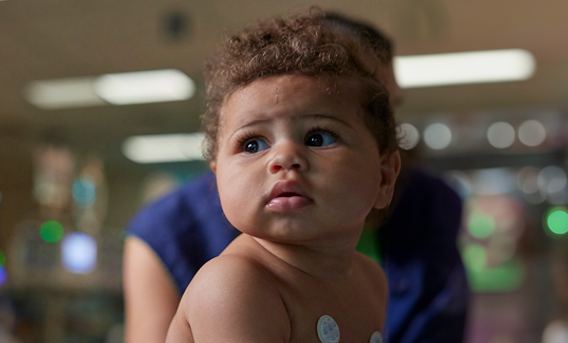
Although serious RSV is uncommon, RSV is a leading cause of hospitalization in babies under age 1.
Seeing your baby in a hospital, especially in a situation where they may need oxygen and IV fluids can be incredibly stressful for a new parent. RSV can be more serious for babies born prematurely or with other health issues.
Meet Beyfortus—a layer of protection against serious RSV lung infection.
Frequently Asked Questions
What are the symptoms of RSV?
Most of the time RSV will cause a mild, cold-like illness. At first, symptoms can include:
- congestion
- runny nose
- irritability
- decreased appetite
- fever
As the infection spreads to the lungs the symptoms can get worse. They include:
- short, shallow, and unusually fast breathing
- a wheezing cough
- nasal flaring
- difficulty eating
- unusual tiredness
- a blue tint to their lips or fingernails
- fever
- developing more severe illnesses like bronchiolitis or pneumonia
What is the difference between RSV, the flu, and COVID-19?
While they're all respiratory illnesses, they're all caused by different viruses. And, though they all share some symptoms—like fever, cough, and shortness of breath—wheezing (a high-pitched whistling sound that occurs when breathing) is more common in RSV infections than it is for COVID or the flu.
What makes RSV so dangerous for babies?
Babies are especially vulnerable to RSV because their immune systems are still developing. They might not have the antibodies they need to protect them during their first RSV season and are more likely to get a serious RSV lung infection than adults or older children.
Can you tell if a baby has RSV by how they breathe?
During an examination, your baby's doctor may notice the presence of RSV and bronchiolitis because of a crackling (almost crispy) noise or wheezing (a high-pitched whistling sound that occurs when breathing).
What does a cough from a baby with RSV sound like?
Coughs caused by RSV can sound wet because of how much mucus is in the airways. This can cause a rattling or gurgling sound when your baby coughs. In severe cases there can also be difficulty breathing and wheezing, a high-pitched whistling sound that occurs when breathing. This could mean a serious infection that requires medical attention.
How do you prevent serious RSV lung infections in babies?
You can help give your baby a layer of protection against serious RSV with Beyfortus. Beyfortus can be given at the same time as other childhood injections, or during any sick visit.
Have more questions about RSV?
Preparing for a doctor’s appointment?
Your child should not take Beyfortus if your child has a history of serious allergic reactions to nirsevimab-alip or any of the ingredients in Beyfortus.
Before your child receives Beyfortus, tell your healthcare provider about all of your child’s medical conditions, including if your child:
- has ever had a reaction to Beyfortus.
- has bleeding or bruising problems. If your child has a problem with bleeding or bruises easily, an injection could cause a problem.
Tell your healthcare provider about all the medicines your child takes, including prescription and over-the-counter medicines, vitamins, and herbal supplements. Your infant should not receive a medicine called palivizumab if they have already received Beyfortus in the same RSV season.
Serious allergic reactions have happened with Beyfortus. Get medical help right away if your child has any of the following signs or symptoms of a serious allergic reaction:
- swelling of the face, mouth, or tongue
- difficulty swallowing or breathing
- unresponsiveness
- bluish color of skin, lips, or under fingernails
- muscle weakness
- severe rash, hives, or itching
The most common side effects of Beyfortus include rash and pain, swelling, or hardness at the site of your child’s injection. These are not all the possible side effects of Beyfortus. Call your healthcare provider if you have questions about side effects.
Please see full Prescribing Information, including Patient Information, for more details.
Click here to learn more about Sanofi’s commitment to fighting counterfeit drugs.
Beyfortus is a prescription medicine used to help prevent a serious lung disease caused by Respiratory Syncytial Virus (RSV) in:
- Newborns and babies under 1 year of age born during or entering their first RSV season.
- Children up to 24 months of age who remain at risk of severe RSV disease through their second RSV season.