
Summary:
Beyfortus (nirsevimab-alip) is a preventive antibody that protects babies born during or entering their first respiratory syncytial virus (RSV) season against serious RSV lung infection. It's not a vaccine—it provides ready-made antibodies directly to the baby. That means it works right away and doesn’t need time to train the body like vaccine would. Beyfortus can help protect your baby for the entire season—usually 5 months—with just one dose.* Beyfortus should be given before a baby's first RSV season. It's already been given to over 11 million babies.†
*Some children may need another dose if they’re still at higher risk in their second RSV season or if they’ve had heart surgery.
†This number is based on sales data (through Oct 2025).
What is Beyfortus?
Beyfortus (nirsevimab-alip) is a preventive antibody that protects babies born during or entering their first respiratory syncytial virus (RSV) season against serious RSV lung infection.

An antibody, not a vaccine
Preventive antibodies, similar to Beyfortus, have been given to certain babies for over 25 years. Antibodies act like a bodyguard for your baby’s immune system, offering ready-made protection against RSV. Unlike vaccines, which train the body to respond over time, Beyfortus helps deliver a rapid defense against serious RSV lung infection—no training required.

Lowers risk of serious RSV disease
RSV is common, and while most cases are mild, it can lead to serious lung infections in babies. Beyfortus can give your baby a layer of protection from RSV, reducing the risk of hospitalization.

#1 prescribed RSV protection for babies*
Over 11† million babies have been given Beyfortus to help protect them from serious RSV lung infection.
*IQVIA data through March 2026.
†This number is based on sales data (through Oct 2025).
The most common side effects of Beyfortus include rash and pain, swelling, or hardness at the injection site. Serious allergic reactions have happened.
How Beyfortus works
Babies don’t yet make all the antibodies they need to fight RSV. Beyfortus steps in with extra preventive antibodies that attach to the virus to help stop it from infecting the lungs. This protection kicks in quickly and helps lower the risk of serious illness during the RSV season, typically 5 months.
1 season. 1 dose,* before or during RSV season.
The AAP recommends that babies 8 months old and younger should get Beyfortus before or during the RSV season. The timing depends on your baby’s birth month. RSV season usually starts in the fall.
*Some children may need another dose if they’re still at higher risk in their second RSV season, or if they’ve had heart surgery.
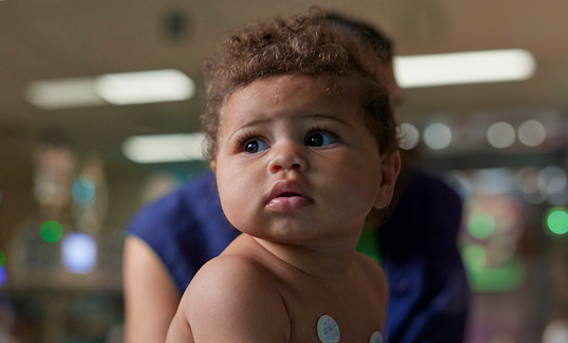
Select the season that matches when your baby was born to see what’s recommended.
Fall Birthday
RSV season is just beginning, and Beyfortus is available beginning October 1 in most places. Your baby should be able to get Beyfortus in the hospital at birth, or at their first well visit.
Winter Birthday
Since RSV season is still underway, you should plan to get Beyfortus for your baby as soon as possible, ideally in the hospital at birth or at your baby’s first well-visit.
Spring Birthday
For babies born just after RSV season, it’s important to plan ahead. Beyfortus is available starting October 1 in most places, so set a reminder to make an appointment then.
Summer Birthday
For summer babies, RSV season is just around the corner, so it’s a good idea to have your plan to get Beyfortus in place. Ask your baby's doctor for an early fall appointment.
Why Beyfortus?
RSV is a common virus, but it can cause serious illness in babies. In fact, it’s a leading reason that babies are hospitalized, and can lead to severe illnesses like bronchiolitis or pneumonia. That’s why the AAP recommends all infants get protection for RSV season. Choosing Beyfortus is a simple way to help lower your baby's risk of serious RSV lung infection from the start.

11M*+ babies have gotten Beyfortus
That’s millions of parents and doctors choosing Beyfortus to help protect babies from serious RSV illness.
*This number is based on sales data (through Oct 2025).

One dose of Beyfortus protects for their first season
Beyfortus helps protect your little one for 5 months, the length of the typical RSV season.

Beyfortus reduces the chance of needing RSV medical care
While most cases are mild, serious RSV infection can lead to multiple doctor visits or even hospital stays for babies. Beyfortus helps lower the risk of that happening.
An additional dose of Beyfortus may be needed for children up to 24 months of age who remain at increased risk for severe RSV disease in their second RSV season. For children undergoing cardiac surgery with cardiopulmonary bypass, an additional dose of Beyfortus is recommended as soon as the child is stable after surgery.
Beyfortus may not protect all children.
Want to learn more about how Beyfortus could help protect your baby?
Beyfortus stories
Janay’s RSV story
“As a person of color, it's especially important for me to get the word out to my community and to other communities where RSV protection is just not as widely discussed.”
Read about Janay’s RSV experience
Janay’s video transcript
JANAY: I am being compensated for sharing my story with you in this video.
My husband and I live in a little neighborhood just outside of Los Angeles with our daughter Silver.
And we're slowly but surely getting back into the hobbies that we used to love with a new baby now in tow, and introducing her to all the things that we love to do. And um, that includes hiking. We love to go to the beach. We love to go to concerts. We're just really active.
It was a very exciting time to learn that our family was growing and that we were going to be expecting a new little buddy to join us on our adventures.
But the pregnancy was a little bit complicated. Silver had a fetal growth restriction, which was something that was unexpected and definitely made us more cautious about keeping her healthy when she got here.
We knew that we wanted to be able to take Silver on all of our adventures and be out and about in the world as much as we possibly could, so we knew that we needed to protect her from anything that she could possibly be exposed to.
The same way that we would put her into a car seat, the same way that we make sure that she's wearing a jacket when it's cold or the same way that we practice safe sleep. It just made sense for us to make sure that we help protect her from any infectious diseases that we could.
I knew that many of the vaccines we'd be giving to Silver were for diseases that weren't as common. RSV wasn't like that. I knew that two out of three babies get RSV by the age of one and some of them will require medical attention for serious lung infection. So it was definitely the thing I was most concerned about.
I made a mental note the next time we had an appointment with Silver's pediatrician to ask them about any sort of options we had to protect Silver from serious RSV lung infection
It was around October, during one of Silver's first pediatrician's appointments, and the doctor asked us if we had any other questions and I was like, “Oh, what about RSV protection? Do you have anything for that?” And she was like, “That's so funny you asked, we literally just got our shipment today.”
Our pediatrician talked about the common side effects with us and let us know that babies should not take Beyfortus if they have allergies to nirsevimab-alip, or any of the other ingredients in Beyfortus.
She went on to tell us that Beyfortus helps prevent a serious lung disease caused by RSV for babies under one, born during or entering their first RSV season and certain kids up to 24 months.
They were able to give Beyfortus to Silver that very same day and I felt super happy that we were able to get that done.
We're very active people; Silver's flown several times, we've taken her to a concert and we just feel so much better maintaining our active lifestyle and doing all of those things knowing that we have done what we could to help protect her from RSV.
As a person of color, it's especially important for me to get the word out to my community and to other communities where RSV protection is just not as widely discussed and it should be because this is serious. This is something that can land your baby in the hospital or require an ER visit, and that's just something that you want to avoid for your baby.
I know some parents may hesitate to help protect their babies from serious RSV lung infection but I just encourage you to do your research, write down your questions and just take it to your pediatrician and just listen to what they have to say.
We can all champion to help protect babies with Beyfortus before RSV.
IMPORTANT SAFETY INFORMATION
Your child should not take Beyfortus if your child has a history of serious allergic reactions to nirsevimab-alip or any of the ingredients in Beyfortus.
Before your child receives Beyfortus, tell your healthcare provider about all of your child's medical conditions, including if your child:
- has ever had a reaction to Beyfortus.
- has bleeding or bruising problems. If your child has a problem with bleeding or bruises easily, an injection could cause a problem.
Tell your healthcare provider about all the medicines your child takes, including prescription and over-the-counter medicines, vitamins, and herbal supplements. Your infant should not receive a medicine called palivizumab if they have already received Beyfortus in the same RSV season.
Serious allergic reactions have happened with Beyfortus. Get medical help right away if your child has any of the following signs or symptoms of a serious allergic reaction:
- swelling of the face, mouth, or tongue
- difficulty swallowing or breathing
- unresponsiveness
- bluish color of skin, lips, or under fingernails
- muscle weakness
- severe rash, hives, or itching
The most common side effects of Beyfortus include rash and pain, swelling, or hardness at the site of your child's injection. These are not all the possible side effects of Beyfortus. Call your healthcare provider if you have questions about side effects.
INDICATION
Beyfortus is a prescription medicine used to help prevent a serious lung disease caused by Respiratory Syncytial Virus (RSV) in:
- Newborns and babies under l year of age born during or entering their first RSV season.
- Children up to 24 months of age who remain at risk of severe RSV disease through their second RSV season.
Please see full Prescribing Information including the Patient Information at the top of this site.
Laine’s peace-of-mind plan
“We decided trying to help prevent RSV lung infection was something that we wanted to prioritize for our family.”
Read about Laine’s RSV experience
Laine’s video transcript
LAINE: We have a three-and-a-half-year-old son named Oliver, and our daughter Allison just turned one. We just love being together when we can. We both work full time. Our weekdays are pretty busy, but on weekends we really like to just spend time together as a family, explore our neighborhood, go to the local parks. We also really love baking as a family, and Oliver's now old enough to be a little bit helpful instead of just making a huge mess.
We thought about a lot of things when we were preparing to welcome a baby, and illness was absolutely one of them. We knew a lot of families with young children, so we saw a lot about how sick kids can get. I think for us it was partially about our children's health primarily, but also what it would mean for us as a busy family, having to juggle sick kids with our work schedules as well.
Oliver was born in 2020, really at the peak of Covid shutdown, so he had very limited exposure to illness as a baby. But when Allison was born in 2023, she was born into a world that was much more open. She had a 2-year-old brother in childcare, so from day one, she had a huge amount more exposure than her brother had. The more I learned about RSV, the more fearful I was. Although most of the time RSV will only cause a mild cold-like illness, it was definitely something we wanted to avoid for our children.
There are a lot of things as a parent that I have no control over that I can't do anything about, and when I have the option to do something that can help them, I absolutely want to do that and I will always choose that option when I can. We decided trying to help prevent RSV lung infection was something that we wanted to prioritize for our family.
I heard about Beyfortus right around the time that Allison was born. I heard some rumblings on social media and news communities that this may be a potential option, and from the beginning I was following those conversations very closely.
I did my research. Beyfortus can help prevent serious lung infection related to RSV for babies under 12 months, born during, or entering their first RSV season, and can also help protect children up to 24 months who remain at elevated risk for severe lung infection related to RSV.
I learned that Beyfortus is a preventative antibody that can help give babies in their first year an extra layer of protection against serious lung infection caused by RSV.
We knew that the most common side effects included rash and pain, swelling or hardness at the injection site.
I had never heard of a preventative antibody. I didn't know what that was, but as I learned more, I had a lot of excitement that this was maybe a way that I could help protect my daughter in a way that I was not able to for my son. I brought up the discussion with our doctor. I made the appointment. I want to help champion for RSV protection by sharing my Beyfortus story.
The advice that I would give to another parent considering Beyfortus as an option for their child would be to spend some time thinking about the risks and benefits of Beyfortus and spend some time thinking about the risks of RSV and to me, it just made sense.
IMPORTANT SAFETY INFORMATION
Your child should not take Beyfortus if your child has a history of serious allergic reactions to nirsevimab-alip or any of the ingredients in Beyfortus.
Before your child receives Beyfortus, tell your healthcare provider about all of your child's medical conditions, including if your child:
- has ever had a reaction to Beyfortus.
- has bleeding or bruising problems. If your child has a problem with bleeding or bruises easily, an injection could cause a problem.
Tell your healthcare provider about all the medicines your child takes, including prescription and
over-the-counter medicines, vitamins, and herbal supplements. Your infant should not receive a medicine called palivizumab if they have already received Beyfortus in the same RSV season.
Serious allergic reactions have happened with Beyfortus. Get medical help right away if your child has any of the following signs or symptoms of a serious allergic reaction:
- swelling of the face, mouth, or tongue
- difficulty swallowing or breathing
- unresponsiveness
- bluish color of skin, lips, or under fingernails
- muscle weakness
- severe rash, hives, or itching
The most common side effects of Beyfortus include rash and pain, swelling, or hardness at the site of your child's injection. These are not all the possible side effects of Beyfortus. Call your healthcare provider if you have questions about side effects.
INDICATION
Beyfortus is a prescription medicine used to help prevent a serious lung disease caused by Respiratory Syncytial Virus (RSV) in:
- Newborns and babies under l year of age born during or entering their first RSV season.
- Children up to 24 months of age who remain at risk of severe RSV disease through their second RSV season.
Please see full Prescribing Information including the Patient Information at the top of this site.
Frequently Asked Questions
What is Beyfortus?
Beyfortus® (nirsevimab-alip) is a preventive antibody. That means it can help give babies the layer of protection they need to fight against RSV, and it can do it right away . Beyfortus can help prevent serious lung infections, like bronchiolitis or pneumonia caused by RSV, in babies under 1 year of age born during or entering their first RSV season. Beyfortus may not protect all children.
How is Beyfortus given?
Beyfortus is usually injected in your baby’s thigh.
What's the difference between an antibody and a vaccine?
Vaccines are like self-defense instructors, they teach the immune system to create its own antibodies. Beyfortus is a preventive antibody which acts like a bodyguard. Beyfortus helps give the protection that your baby’s maturing immune system can’t yet provide for itself against a serious RSV lung infection.
Affordable RSV protection starts here
Discover helpful tips for every
parent
Your child should not take Beyfortus if your child has a history of serious allergic reactions to nirsevimab-alip or any of the ingredients in Beyfortus.
Before your child receives Beyfortus, tell your healthcare provider about all of your child’s medical conditions, including if your child:
- has ever had a reaction to Beyfortus.
- has bleeding or bruising problems. If your child has a problem with bleeding or bruises easily, an injection could cause a problem.
Tell your healthcare provider about all the medicines your child takes, including prescription and over-the-counter medicines, vitamins, and herbal supplements. Your infant should not receive a medicine called palivizumab if they have already received Beyfortus in the same RSV season.
Serious allergic reactions have happened with Beyfortus. Get medical help right away if your child has any of the following signs or symptoms of a serious allergic reaction:
- swelling of the face, mouth, or tongue
- difficulty swallowing or breathing
- unresponsiveness
- bluish color of skin, lips, or under fingernails
- muscle weakness
- severe rash, hives, or itching
The most common side effects of Beyfortus include rash and pain, swelling, or hardness at the site of your child’s injection. These are not all the possible side effects of Beyfortus. Call your healthcare provider if you have questions about side effects.
Please see full Prescribing Information, including Patient Information, for more details.
Click here to learn more about Sanofi’s commitment to fighting counterfeit drugs.
Beyfortus is a prescription medicine used to help prevent a serious lung disease caused by Respiratory Syncytial Virus (RSV) in:
- Newborns and babies under 1 year of age born during or entering their first RSV season.
- Children up to 24 months of age who remain at risk of severe RSV disease through their second RSV season.